03 · ResearchMaster of Design thesisUniversity of Cincinnati, DAAP2022
Next Generation EV Charging Infrastructure
A method for deciding where a city's next chargers go, and what charging should become once electric cars are the default rather than the exception. Cincinnati is the case; the method travels.
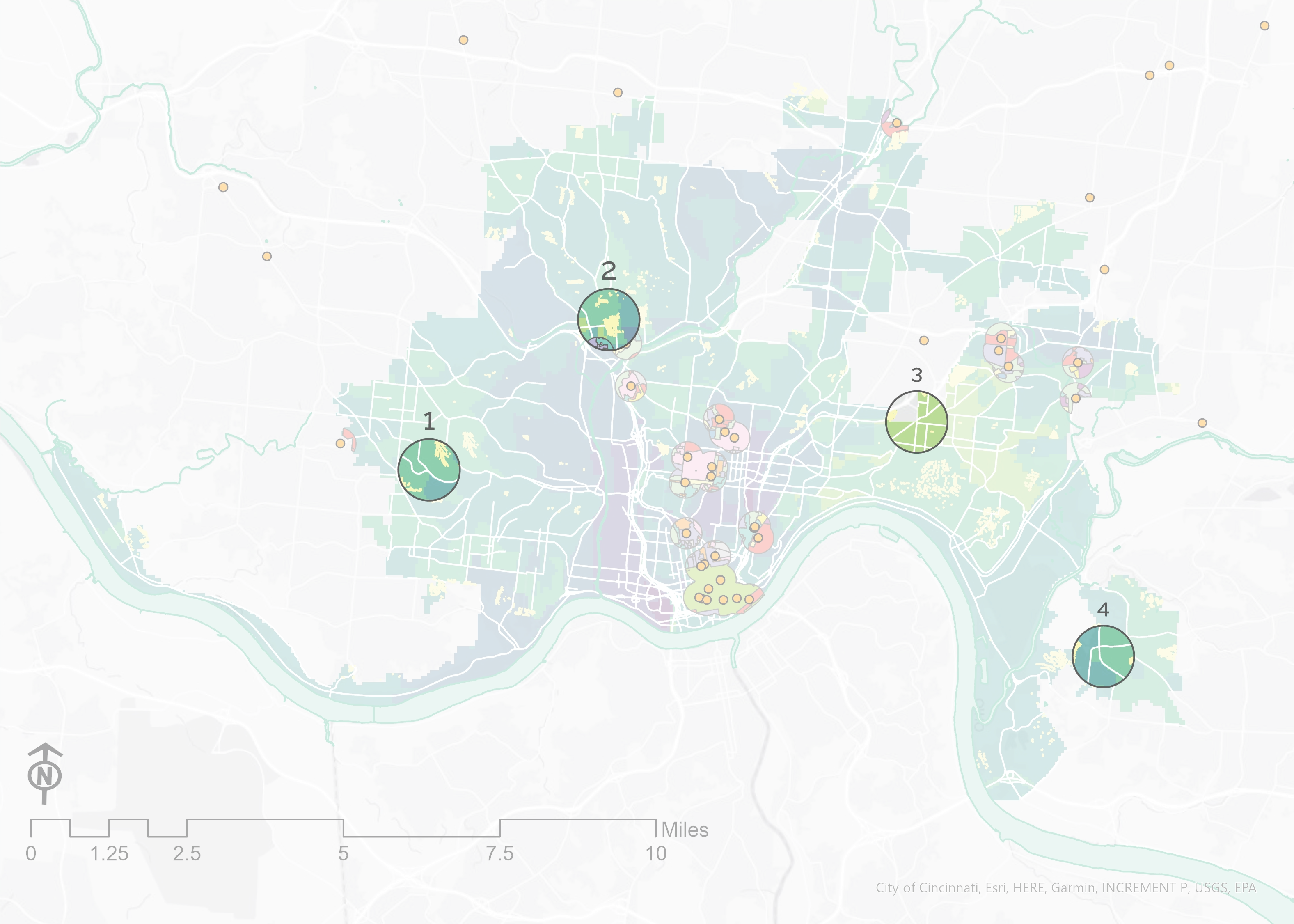
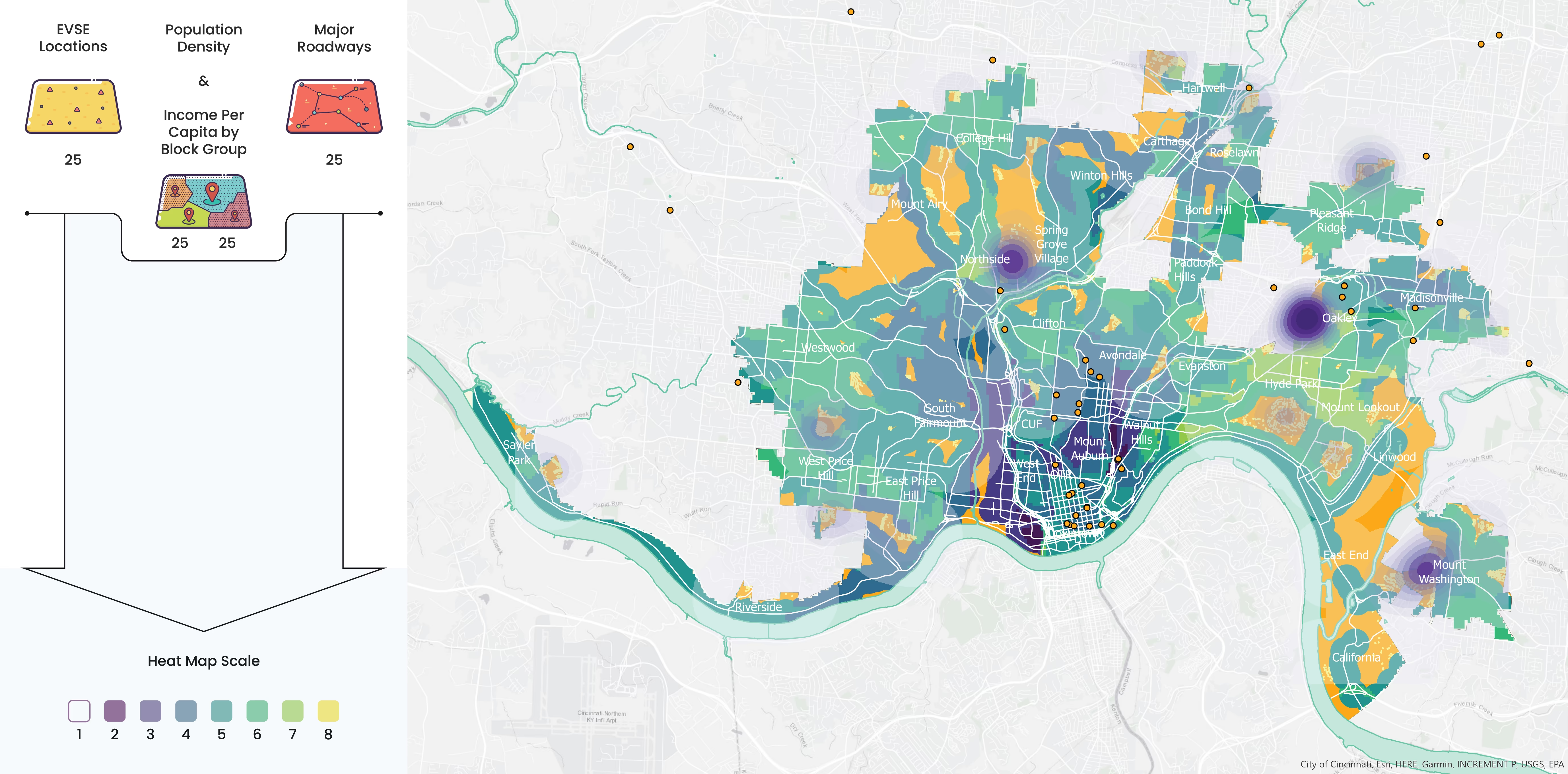
Where the next chargers go. Four candidate sites from the weighted overlay. 1 Westwood, 2 Northside, 3 Hyde Park–Oakley, 4 Mount Washington.Fig. 15 · GIS overlay result
Weigh who lives there, what they earn, how hard the roads work, and where chargers already aren't, and Cincinnati's next charging sites pick themselves.
Method
GIS weighted overlay, plus a 22-question survey of EV owners
Scope
Cincinnati's 52 neighborhoods, block group by block group
Outcome
Four sites, presented to the City of Cincinnati and Electrada
Today's worries are range and charging speed. Adoption moves the problem to capacity, and to who gets left without a plug.
2021 figures
Electric cars are coming whether the infrastructure is ready or not. Every major automaker has put a date on the end of the gas car, and the 2021 infrastructure bill set aside $7.5 billion for half a million public chargers. The charging network has to grow faster than the fleet, and it has to grow in the right places.
Early owners rarely feel the gap. They tend to own homes with garages, so they charge overnight and worry mostly about long trips. Seven in ten American homes have off-street parking (The Economist, 2021). The other three in ten do not, and that is who a public network exists for: renters in dense neighborhoods, people who park at the curb, households buying an EV because that is what the dealer sells. They depend on a network that mostly does not exist yet. That is the bottleneck this thesis set out to get ahead of.
0.36%of vehicles on US roads were electric in mid-2021
9 : 1EVs per public charger in the US, against 5 : 1 in the EU and China
46,775public charging stations, against roughly 150,000 gas stations
5.3%of public chargers are DC fast; the rest take 30 minutes to hours
The commitments are dated. Automaker electrification pledges plotted against the road to carbon neutrality.Chart from the current site
Two lines of research run side by side. One reads the city; the other reads the owners. They meet in the synthesis below.
Spatial · Human
The order matters. Literature first, then the questions and hypotheses, then two case studies to borrow from. GIS found the sites; a survey found the users; coding the survey produced values and principles; the principles scored the solutions; the city judged them. The flowchart is the thesis in one column.
The method, left to right.Fig. 3, redrawn for this site
Spatial: reading the city
GIS
Two published studies set the approach. A Dutch team had shown that publicly available GIS data can describe an urban context well enough to predict how charging stations get used. A Portland project had targeted the people most likely to be stranded: multi-family housing without access to transit. This thesis borrowed both, and pointed them at Cincinnati.
Four layers were reclassified onto a common scale and combined in a weighted overlay. Each earns its place for a reason.
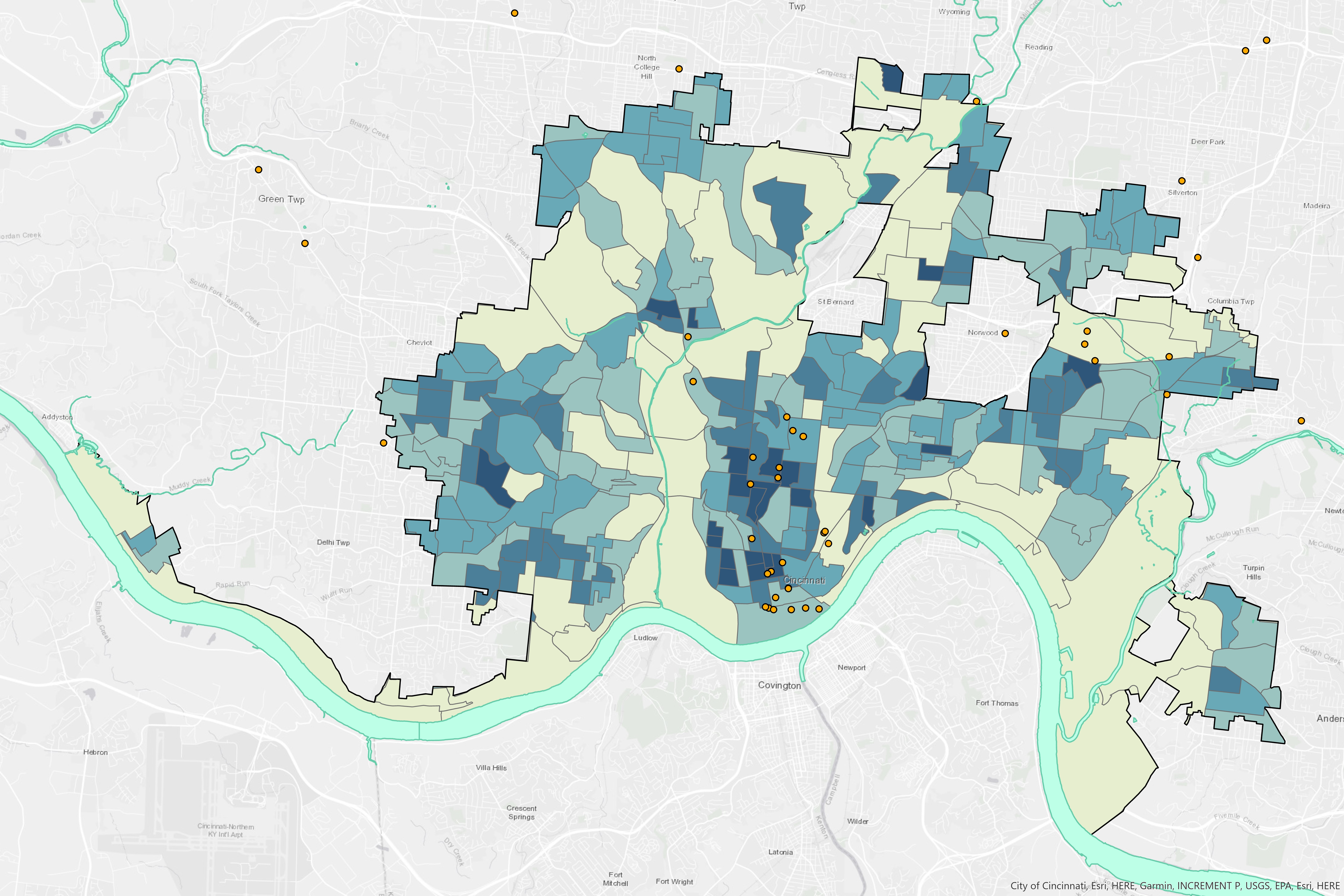
01Population density by block group
25 points
Where people are. The Dutch study's first move was to describe the urban context by data, and density is the base layer of that description.
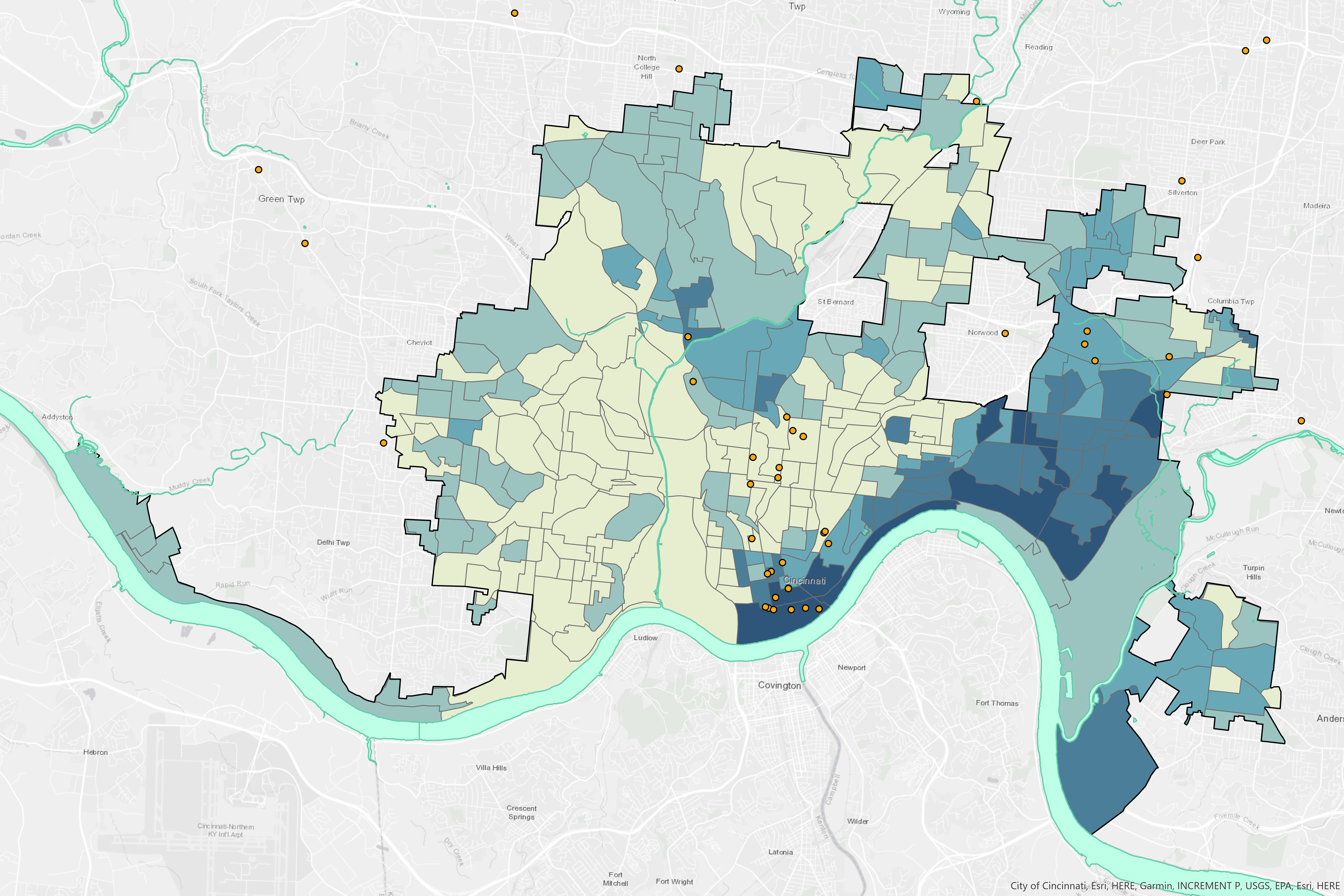
02Per-capita income by block group
25 points
Where demand is today. EV ownership still tracks wealth, so income locates the buyers who exist now while density locates the ones coming next.
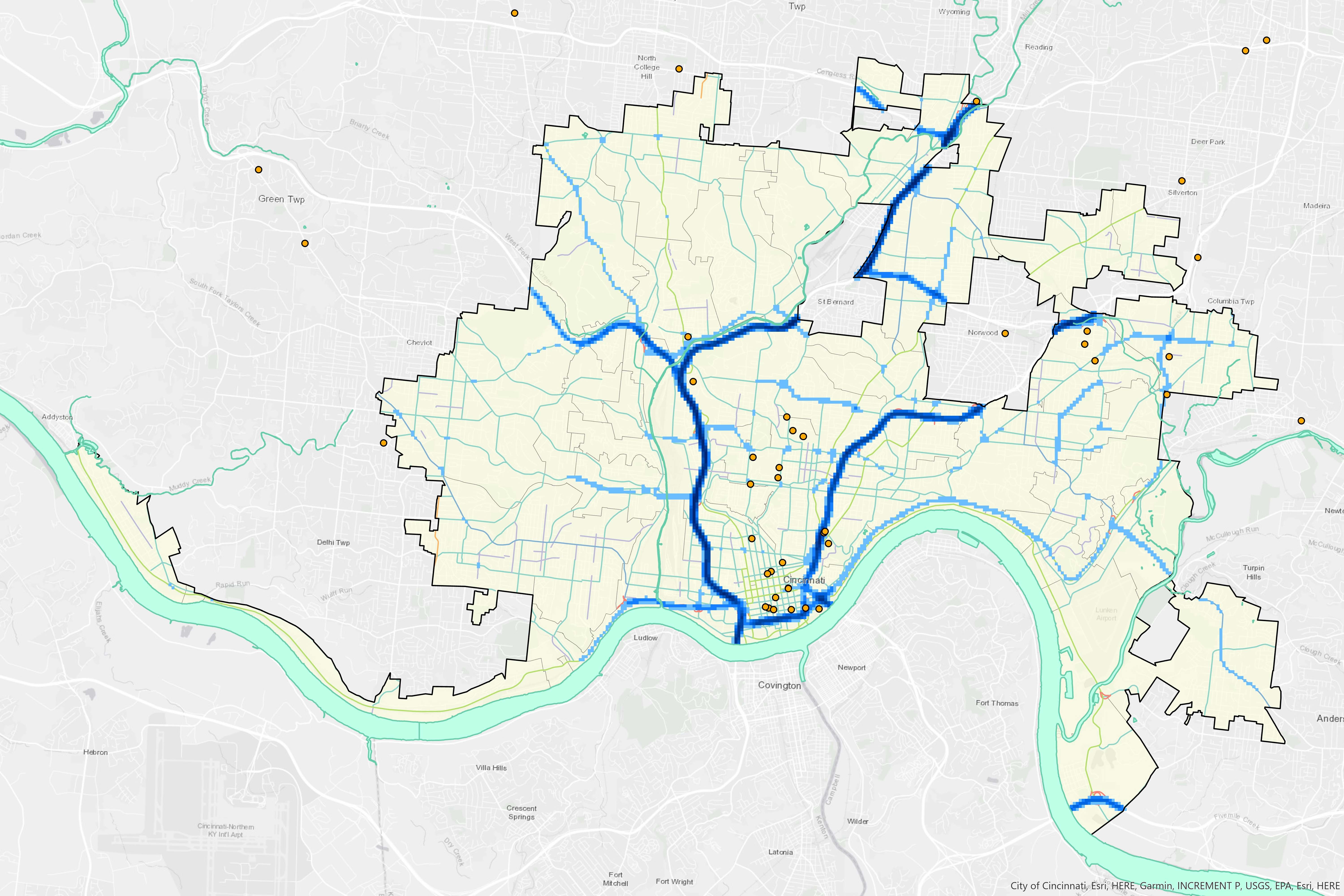
03Traffic on major arterials
25 points
Annual average daily traffic, reclassified, to measure how hard each road works and how that relates to the chargers already on it.
04Existing charger density, inverted
25 points
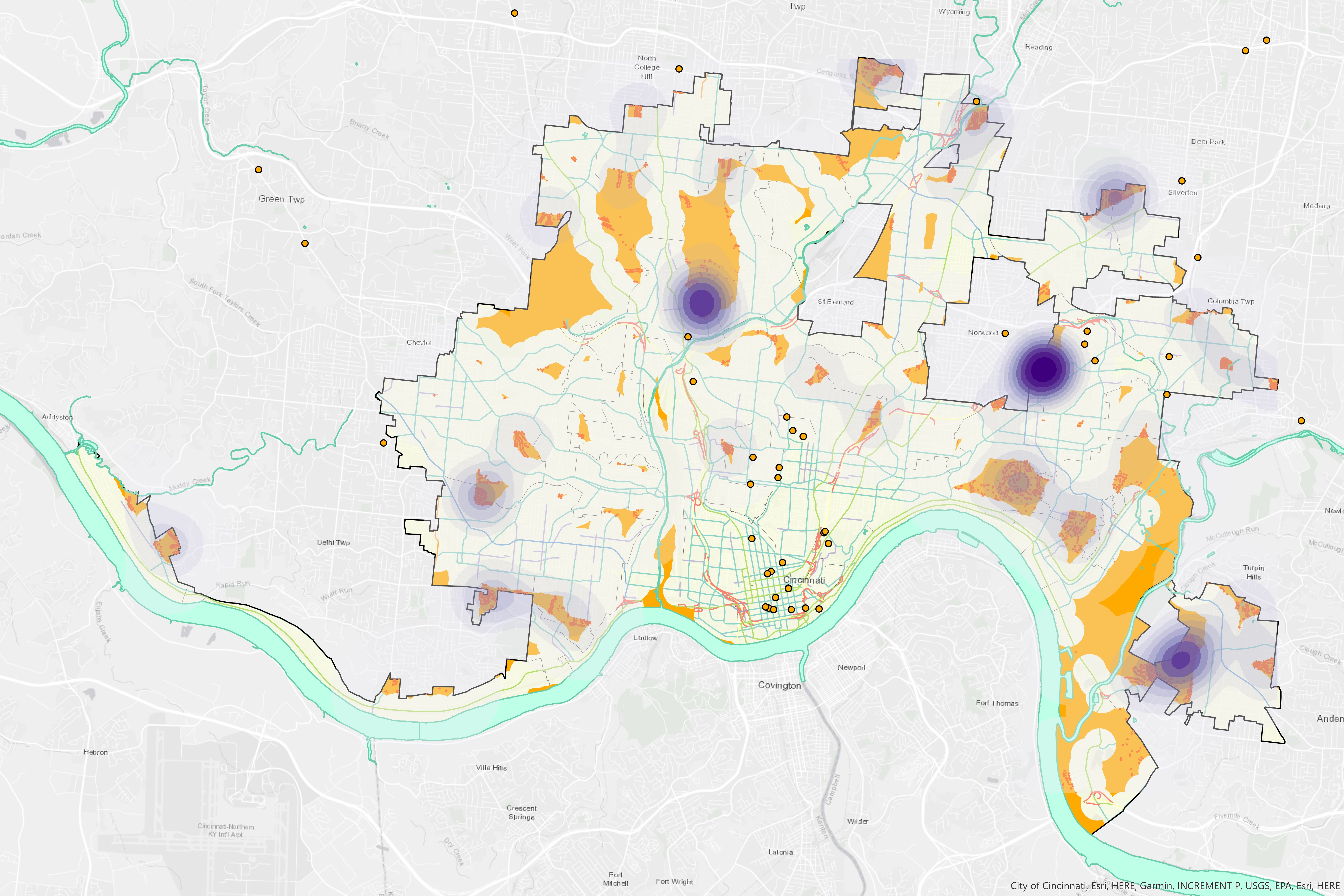
A kernel density of current stations, scored so the emptiest areas rank highest. This is the gap-filling term; without it the overlay would keep rewarding downtown.
Why equal weights. The thesis had no evidence that one factor should outrank another, so it used a neutral baseline: 25 points each, 100 in total. It says so directly, and names alternative weightings as the first thing future work should test.
Two more layers then filter the regional result down to local sites, both taken from the Portland study: multi-family housing outside a quarter mile of any bus stop, and the zoning found within a quarter mile of existing chargers, used as the signal of land use that supports a station. Sites that matched or beat the qualifications of current stations went forward. Four did.
EVSE locations
Neighborhoods
Population
Roadways
Parcels
Zoning
Elevation
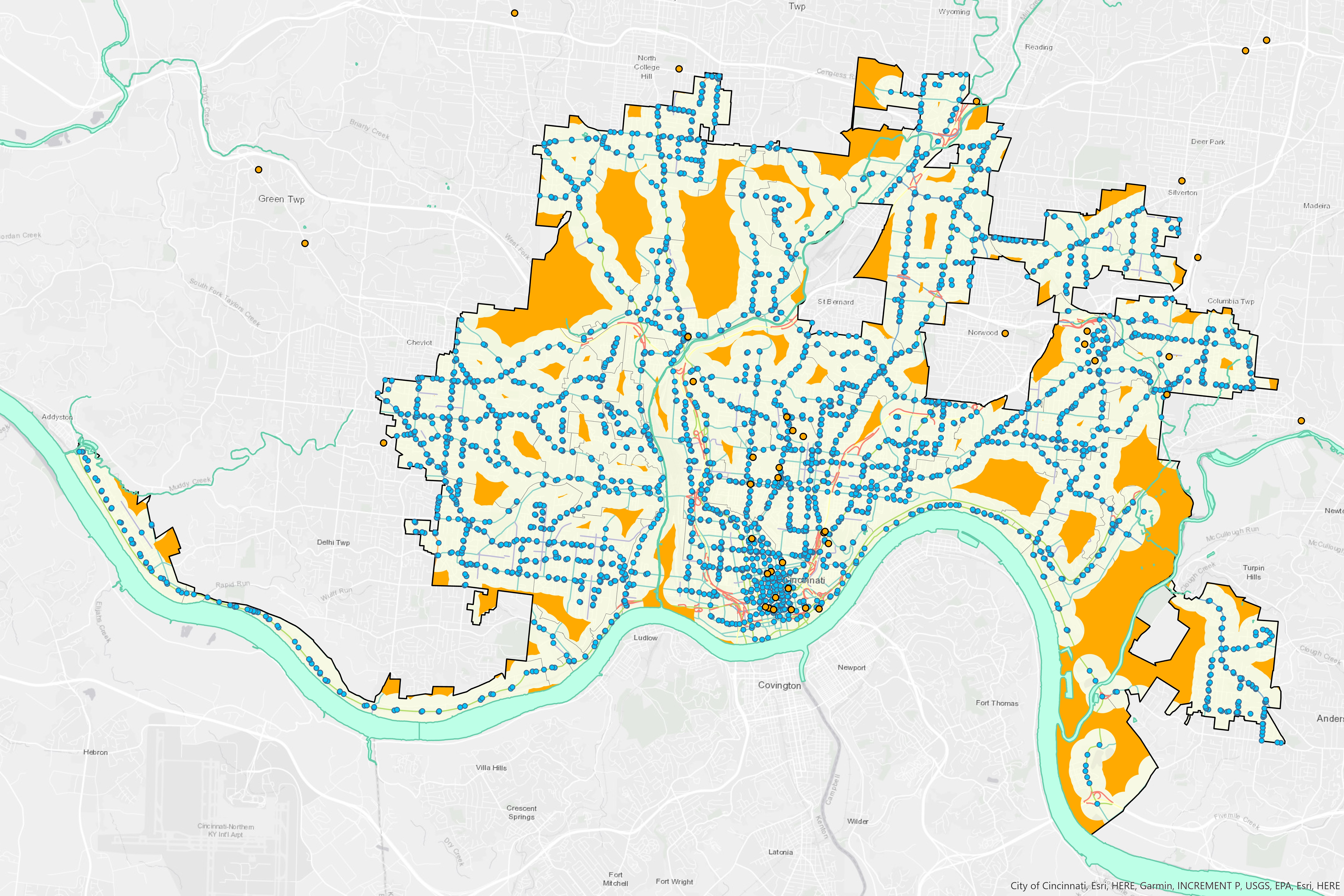
Population density, reclassifiedFig. 10Per-capita income, reclassifiedFig. 10Major roadways by daily trafficFig. 12Bus stops and areas without transit accessFig. 11Multi-family housing where transit is absentFig. 11Four layers, 25 points each, into one overlayFig. 13 · thesis PDF
Human: reading the owners
Survey
The map says where. The owners say what for. With IRB approval, a 22-question survey ran for 14 days as a paid national Facebook ad and, with permission from the operators, as a QR code posted at four Cincinnati charging sites: the Cincinnati Art Museum, Findlay Market, the Fountain Square South garage, and the Clifton Court garage at UC. Eight minutes to complete, hosted on SurveyMonkey.
The recruitment flyer. Posted at charging sites around the city and run as a national ad.Fig. 17
Who you are
Q1I am a…
Q2What is your age range?
Q3I currently live in… (urban, suburban, rural)
Q4What is your nearest city?
What you drive
Q5What type of electric vehicle do you own?
Q6What influenced you most when purchasing it?
Q7Who is the manufacturer?
Q11Does your household also own a gasoline or diesel vehicle?
Q12How many vehicles does your household own?
How it feels
Q8What, if anything, do you like about your EV?
Q9What, if anything, do you dislike about it?
Q10How satisfied are you with your current EV?
Q13What gives you the most concern about owning an EV?
Q14If you bought another car, how likely is it to be an EV?
How you charge
Q15Where is your most preferred charging location?
Q16What, if anything, is most frustrating about charging?
Q17Has your EV ever lost charge on the road?
Q18If it broke down on the road, what would you do?
Q19Away from home, how long do you spend charging?
What you want
Q20On the road, how do you spend the time while charging?
Q21Which facilities do you wish were available while charging? Top three.
Q22Should EV charging infrastructure be standardized?
Who answered. 43 people, narrowed to the 37 who drive an all-electric car. They look like one person.
84%men
57%over 65
59%suburban
57%drive a Tesla
84%also own a gas car
84%prefer to charge at home
89%very satisfied
78%want charging standardized
What they said. Asked what they like, they named cost of ownership, performance, and low maintenance. Asked what they dislike, the most common answer was "nothing," then range. Asked their biggest concern, nearly half chose "other" and wrote in "nothing" again, alongside cold-weather batteries and long trips into Canada. Range anxiety, the headline fear in the literature, came third at 19%. The people who already own EVs are not the people the network is failing.
Two personas, derived by contrast. The data describes the Current User: older, wealthier, suburban, charging in a garage overnight, whose problems are mostly solved. The Future User is who the sample does not contain, built from what the literature says is coming: younger, renting, in denser housing, buying an EV because it is affordable and the default, and dependent on public charging. The thesis is explicit that the solutions are for the second person.
Current User Age 55 and up
The early adopter. Established career, close to retirement, a house in the suburbs with a garage, so charging is rarely a concern. Environmental conviction drove the purchase, and they will tell you so.
What worries them
"Nothing"
Waiting on a level 2 charger to be installed at home
Charging on long-distance commutes and trips
The range of today's EVs
Charging speed at public stations
Future User Age 24 to 35
The next generation of owners, who in a few years will buy an EV because it is the affordable default. Still building a career, unlikely to own a home, likely renting in a dense neighborhood where the parking is on the street.
What worries them
Getting to a charger at all
Finding a free charger at a public station
Abuse of equipment at public stations
The lack of charging infrastructure in general
From thesis Fig. 23, rebuilt in HTML.
Survey results
Coded from the responses
Q8 · Answered 43 · Skipped 0
What, if anything, do you like about your electric vehicle?
Everything. Remarkable performance, loaded with bells and whistles, easy to keep charged from a home charger, easy to charge on longer trips at Tesla charging stations.
Acceleration and responsiveness. I also like driving past the gas stations and knowing that I'm not subject to the ups and downs of gas prices. My electric provider has a flat rate that hasn't gone up in a decade.
I like "refueling" in my garage at a very reasonable rate.
Great for short or long trips. Cheap to run, comfortable, fun to drive. No gas fumes or exhaust to inhale.
14Cost of ownership
14Performance
10Low maintenance
9Quiet
7Zero emission, comfort
Q9 · Answered 43 · Skipped 0
What, if anything, do you dislike about your electric vehicle?
Target of some people's anger.
Travel over 200 miles on the highway. Beyond 200 or so it becomes time-prohibiting to do longer road trips on a time crunch.
Low range, long charging times.
Nothing.
How hard it was to find and get one in Florida. Most car dealers only sell in five states. I had to travel across the state to find a dealership that had one.
11Nothing
8Range
7IT issues
3Charging speed
3Affordability
Q16 · Answered 34 · Skipped 3
What, if anything, is most frustrating about charging your electric vehicle?
Nothing32.35%11
Charging time20.59%7
People11.76%4
No existing standard5.88%2
Availability of public chargers5.88%2
Smartphone charging apps5.88%2
Charging too fast2.94%1
Abuse of charging stations2.94%1
Battery concerns2.94%1
Lack of charging stations2.94%1
Cost to install a level 2 charger2.94%1
Q20 · Answered 35 · Skipped 8
While on the road, how do you spend most of your time when charging? Select all that apply.
Restroom break57.14%20
Beverage or snack break54.29%19
Other28.57%10
Listening to music, relaxing25.71%9
Social media25.71%9
Games and entertainment22.86%8
Communicating with friends and family22.86%8
Reading, catching up on work17.14%6
Sleeping14.29%5
Q21 · Answered 43 · Skipped 0
While on the road, what facilities do you wish were most available when charging? Top three.
Clean restrooms76.74%33
Full restaurant58.14%25
Coffee or snack bar51.16%22
Convenient resting lounge space37.21%16
Green space for pets16.28%7
Outdoor sitting16.28%7
Scenic view13.95%6
Other13.95%6
Digital entertainment arcade6.98%3
Q22 · Answered 43 · Skipped 0
Do you believe that electric vehicle charging infrastructure should be standardized?
Yes81.4%35
No6.98%3
Don't care11.63%5
Each card states its own base. Q8, Q9, Q21, and Q22 count all 43 respondents; Q16 and Q20 count the all-electric owners who answered. Tallies under Q8 and Q9 are mentions, coded from the written answers.
Synthesis
The survey was coded into six user values. The values produced six design principles. The principles scored the solutions.
Values · Principles · Scores
Six user values
Coded from the survey
01Cost and performance both matter, to the owners of today and the owners of next year. Cost of ownership and performance were the two most-cited likes.
02Independence from the pump. Electricity prices do not swing week to week the way gas does, and owners feel that.
03Ease of ownership: charging within reach, and little to maintain.
04A real contribution to the climate. Environmental concern was the top purchase motive for nearly half of respondents.
05Charging at home, on your own schedule. 84% named home as the preferred place to charge.
06Trust on long trips. Range and sparse chargers between cities were the dislikes that were not "nothing."
Six design principles
Derived from the values
01Match or beat the convenience of a gas station.Answers values 1 and 3, and the thesis's founding research question.
02Let several charging solutions coexist.No single technology serves a garage owner and a curbside renter alike.
03Build trust for long distances.Answers value 6.
04Borrow what drivers already know from gas cars.Familiar conventions lower the cost of switching.
05Design for the worst case: a dead battery, no public charger in reach, abused equipment. Answers the Future User's concerns directly.
06Look past the car to the innovations that will change mobility itself. Keeps the framework from aging with today's hardware.
Scoring the solutions
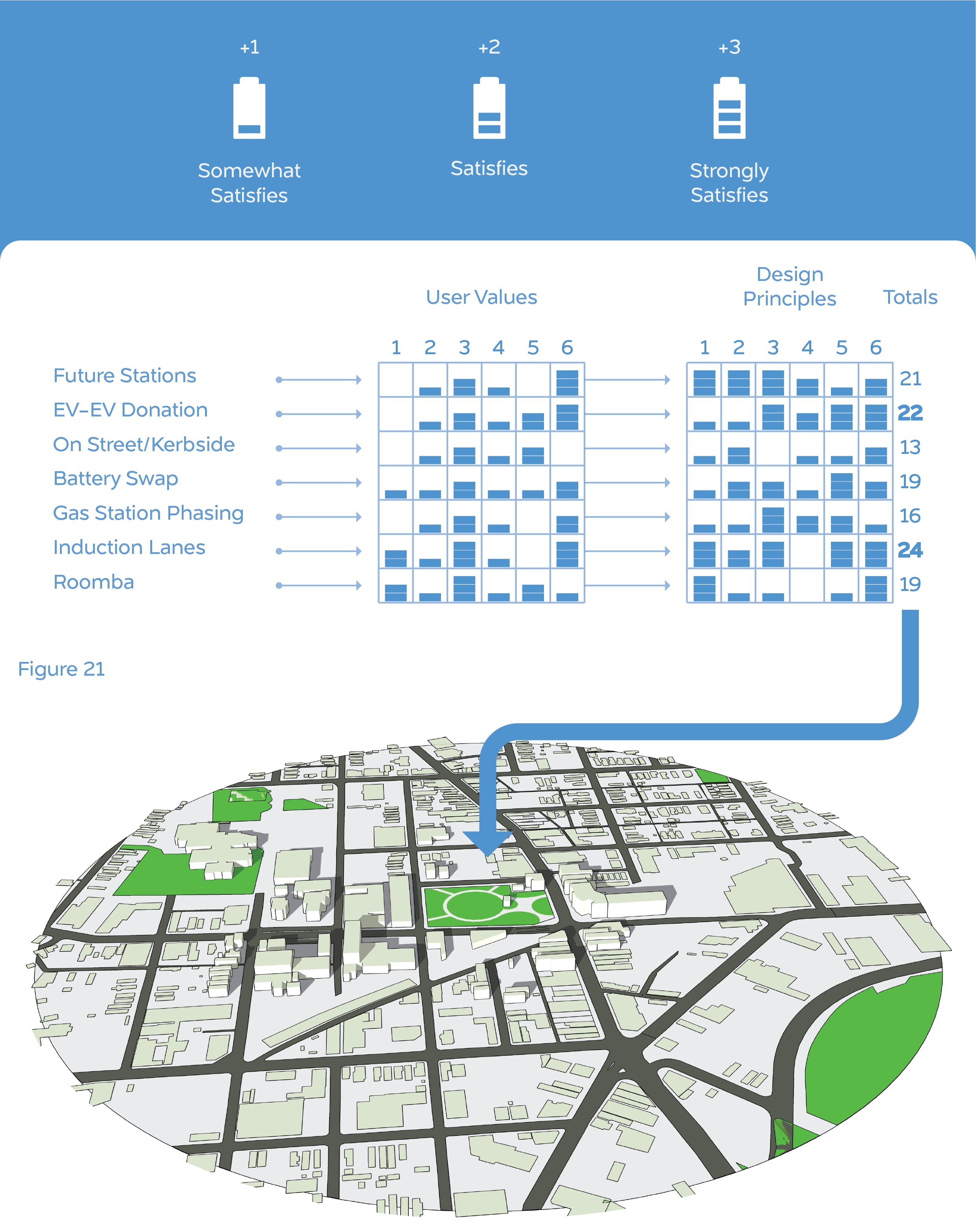
Each proposal was scored against every value and every principle, one to three points per cell. The totals are honest about which ideas the research actually supports, and they do not line up neatly with the horizon they sit on.
The evaluation matrix, leading into the Northside model. Battery icons mark one, two, or three points per cell. The top score points to Site 2, Northside, modeled from GIS data in Rhino and SketchUp.Fig. 21, adapted for this site
Induction charging lanes24
EV-to-EV charge donation22
Future fast-charging stations21
Reserve battery swap19
Autonomous self-charging19
Gas station phasing16
On-street charging13
Out of a possible 36. The highest-scoring idea is also the one the city called least feasible; see below.
What the city said
Validation
The method and findings were presented to the City of Cincinnati and to Electrada, a charging-station contractor. Both favored the GIS work and agreed it would transfer to any city with similar data. Electrada had already been looking at Northside on its own.
Induction lanes: not feasible, for now. The City expected road wear to make maintenance a resource sink. The thesis keeps the idea for places where vehicles queue or idle, and points to Electreon's first US lane in Detroit as the one to watch.
Curbside charging: sooner than placed. Both parties said on-street charging was already in development nationally and would reach Cincinnati earlier than the mid-term horizon.
EV-to-EV charging: later than placed. Different makes carry different battery densities and outputs, so a shared cable risks damage. It waits on national standardization of batteries, ports, and cables.
The rest: on schedule. The remaining proposals were read as plausible within the horizons the thesis gave them.
Seven solutions
Built for the Future User, staged by when the technology and the politics could plausibly land. Scores are from the matrix above.
3 to 35 years
Short term · 3 to 5 years
Solutions 1 and 2
Future fast-charging stations
Score 21
Use the GIS method to put new public stations where transit is thin and multi-family housing is dense. Equip them with the Ford and Purdue cable that cools by changing phase, cutting a charge to under five minutes. Bill through a toll-tag sticker so payment is automatic. Until charging is that fast, build stations as destinations with shops and parks around them, not as stops.
ContextAligned with the $7.5 billion in the 2021 infrastructure bill for 500,000 stations.
EV-to-EV charge donation
Score 22
Jumper cables for the electric age. A bi-directional cable and an app let one car give another enough charge to reach a station. Owners opt in to donate, set how much of their battery is on offer, and every transfer is logged. Every parked EV becomes a potential charging point.
City feedbackNeeds standardized batteries, ports, and cables first. Expect it later than placed.
Mid term · 5 to 10 years
Solutions 3 and 4
On-street charging
Score 13
For the dense neighborhoods where parking is at the curb: 120V and 220V outlets phased into on-street spaces as demand grows, with piezoelectric paving on busy streets feeding some of the load from the traffic and footfall above it.
City feedbackAlready arriving nationally. Cincinnati will see it sooner than the mid-term horizon.
Reserve battery swap
Score 19
Not a whole-battery swap: a small, standard reserve module in every EV that detaches without touching performance and carries enough charge to get home. Roadside services carry spares; drivers keep one in the trunk like a spare tire; stores sell them like AA cells.
Long term · 10 to 15 years
Solutions 5 and 6
Gas station phasing
Score 16
Gas stations convert in stages as the fleet turns over: a quarter of pumps to chargers within five years, three quarters within fifteen. Never all of them, because some gas cars will stay on the road. Analysts expect most stations to be unprofitable by 2035 otherwise.
Induction charging lanes
Score 24
Stretches of road that charge the car as it drives, paid for with a flat road-style tax. GIS picks the heaviest-traffic corridors first. Charging companies could compete for lanes the way fuel brands compete for corners. The highest-scoring idea in the matrix.
City feedbackThe City did not think it feasible: road wear makes maintenance a resource sink. Best case is where vehicles queue, and Detroit's Electreon lane is the test.
Longer term · 20 to 35 years
Solution 7
Autonomous self-charging
Score 19
Once cars drive themselves, they can charge themselves, the way a robot vacuum finds its dock. The owner never thinks about charge and summons the car back like a ride-hail. Charging infrastructure stops being a place you go.
Three concepts, modeled. EV-to-EV charging off-road and in town, and standardized curbside charging, animated in Blender and Mixamo.
Limits, and what comes next
A thesis is a method with its confidence stated. Here is where this one is thin, in its own words translated.
Read this before citing it
Where it is thin
Limitations
01The sample is small. 37 all-electric owners, gathered during COVID, when Ohio had 14,530 registered EVs in the whole state.
02Local voices barely registered. The four Cincinnati sites returned very few responses, and those mirrored the national ad. The city-specific picture is thinner than the method deserves.
03One question was badly worded. "Has your EV ever lost charge on the road?" reads as ambiguous, since every EV loses charge while driving. The thesis says so and proposes the fix.
04No expert interviews landed. Gas station operators, utilities, and battery makers would have sharpened the horizons.
05One weighting scheme. Equal weights were a defensible baseline, not a tested optimum. Different data, preprocessing, and weights could move the four sites.
What comes next
Future research
01Cost and policy. Installation economics and the regulation around charging, which the literature review only touched.
02Cities further ahead. What the places that have already built for EVs did, and what transfers.
03More overlays. Rerun the GIS with other data sets and other weights, and see which sites survive.
04Thousands of respondents, with questions aimed squarely at charging behavior rather than ownership in general.
05Talk to the industry. Fuel retailers, energy storage, and battery companies, on how they see the switch playing out.
Underneath all five is one instruction the thesis gives itself: run this again when electric cars are common. With under 1% of the fleet electric, the norms of charging have not formed. When they have, this study will be confirmed or corrected, and either outcome is the point.